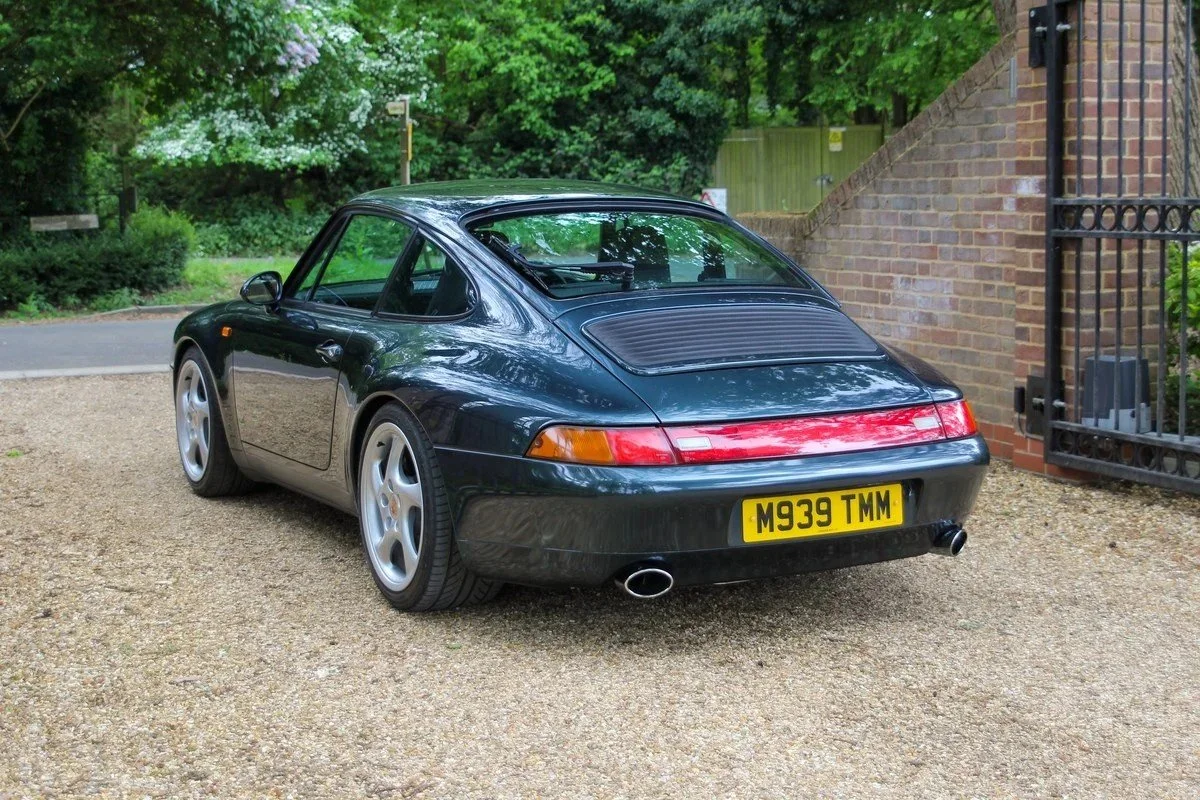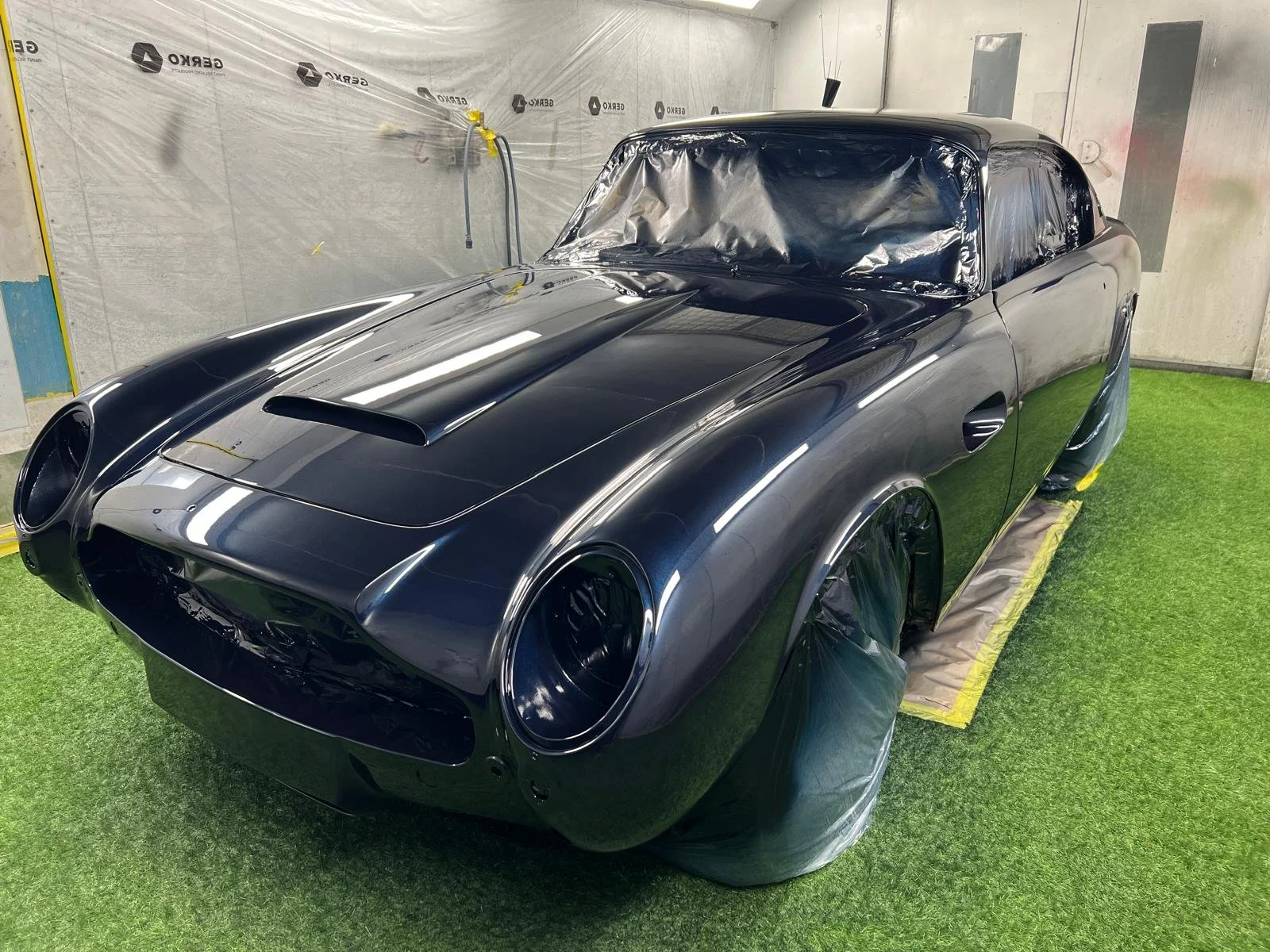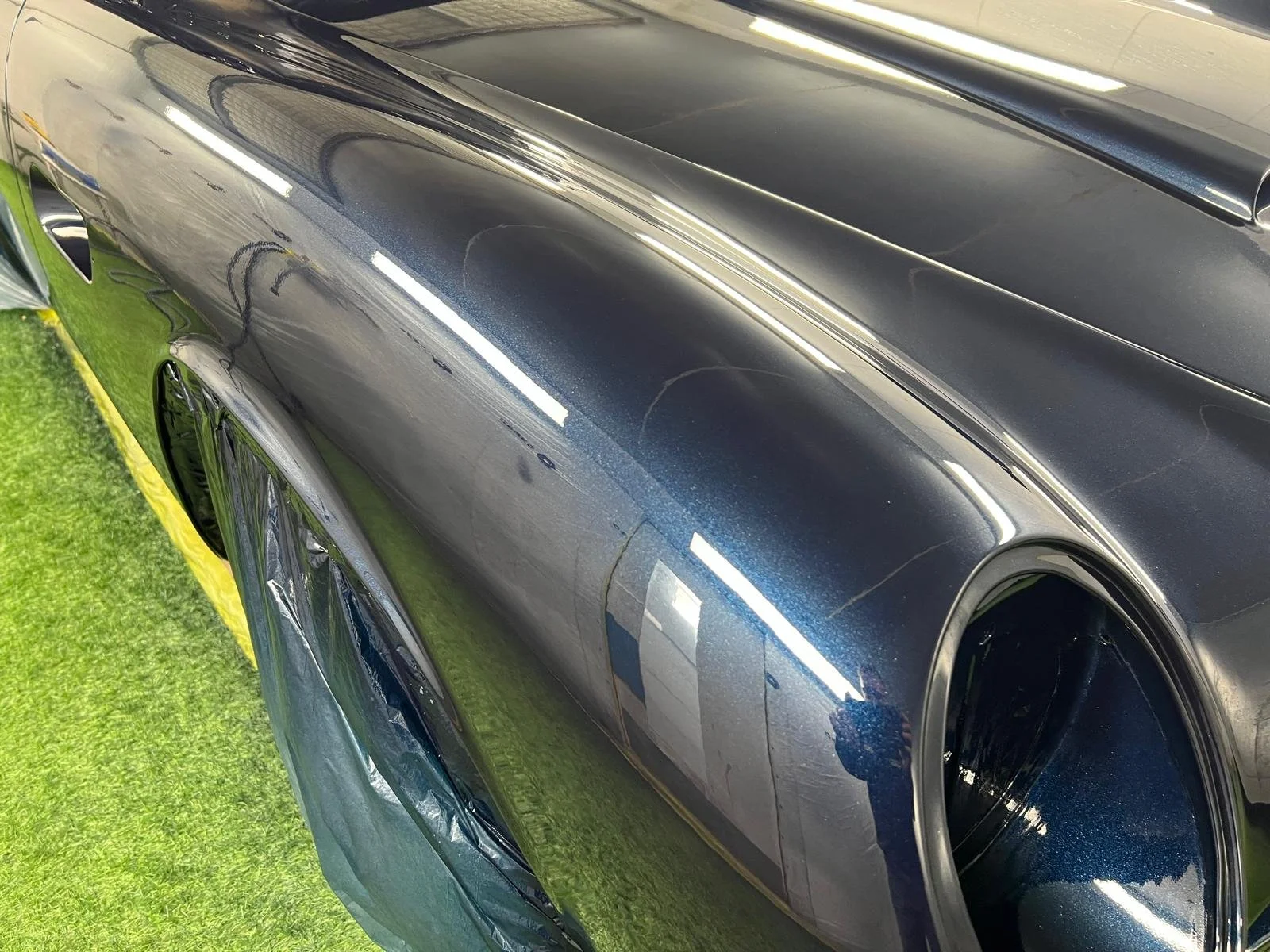
1994 Porsche 993 carrera 2
General Draft Design for GP59 993 Restomod
Engine: Unlocking More from the Air-Cooled Flat-Six
The 3.6-litre M64 is a brilliant starting point for a restomod 993 and a power upgrade to 3.8-litre makes it even better. From that baseline this 993 will realistically extract 320 bhp while keeping it naturally aspirated, streetable, and reliable. Here's how:
• Nikasil-lined cylinders and forged pistons.
• Cylinder heads — CNC port and polish, larger valves, and modern valve-seat materials improve flow and let the engine breathe at higher rpm.
• Camshafts — A sportier profile with more lift and duration sharpens throttle response and extends the power band without killing low-end driveability.
• Intake and exhaust — Individual throttle bodies (ITBs) transform throttle feel and sound; a free-flowing exhaust with sport catalysts or de-cat pipes frees up top-end power.
• Engine management — A modern standalone ECU lets us optimise ignition timing, fuel maps, and rev limits precisely, unlocking gains the factory tune left on the table.
The result is an engine that feels urgent — immediate throttle response, a broader torque curve, and a top end that pulls hard to 7,000+ rpm — while still idling smoothly and running cool in traffic.
Suspension: Modern Precision, British-Road Comfort
The 993's LSA rear end was a huge step forward, but there's room to refine it for today's expectations:
• Adjustable coilovers — High-quality units (Öhlins, Bilstein, or bespoke valved dampers) let us dial in compression and rebound separately. We tune them specifically for UK conditions: firm enough for body control, compliant enough to absorb patchy B-roads.
• Geometry correction — Lowering changes camber and toe; we reset these with adjustable top mounts and control-arm bushings to preserve tyre contact and predictable handling.
• Bushings — Replace worn rubber with spherical bearings or firm polyurethane where precision matters (rear toe links, front control arms) while keeping some compliance elsewhere to absorb road noise.
• Anti-roll bars — Adjustable front and rear bars let us tune understeer/oversteer balance to suit the driver's preference.
• Steering feel — A quick-ratio steering rack or shorter Pitman arm sharpens turn-in without twitchiness.
The goal is a car that's connected — you feel the road surface, the chassis responds instantly to inputs — but it doesn't beat you up on a long drive or tramline in ruts.
Gearbox: Keep, Re-Gear, or Upgrade?
The G50 six-speed is a robust, characterful gearbox — we’re keeping it but tightening the ratios:
• Shorter first and second — Drops the gap between shifts, makes the car feel punchier out of corners and more engaging at legal speeds.
• Final-drive ratio — A shorter diff ratio (say, moving from 3.44 to 3.67 or 3.89) multiplies the effect, making every gear feel more urgent.
• Short-shift kit and new linkage bushings — Reduces throw and tightens the gate, so shifts feel mechanical and precise.
The trade-off is slightly higher cruising revs on the motorway, but with a well-balanced engine build that's not a problem — and the character gain on a back road is worth it. If you want the best of both worlds, a six-speed with closer lower ratios and a taller sixth for cruising is achievable with custom gearsets.
Chassis Rigidity: Making It Stiffer Than Factory
When the shell is stripped to bare metal, we have a one-time opportunity to reinforce it properly:
• Seam welding — The factory spot-welds major structural joins; we go back and fully seam-weld the floor pan, wheel wells, suspension turrets, and door sills. This ties the monocoque together far more rigidly.
• Reinforcement plates — Gusseted plates at high-stress areas: front strut towers, rear spring mounts, subframe mounting points.
• Roll cage or half-cage — Even a bolt-in half-cage tied to the B-pillars and rear shock towers adds significant torsional rigidity without ruining usability.
• Subframe connectors — Weld-in braces that link front and rear subframes through the floor tunnel.
• Modern adhesives — Structural panel bonding with aerospace adhesives adds stiffness and reduces NVH.
The result is a chassis that's stiffer, more predictable at the limit, and safer — without adding much weight. It also means the suspension can do its job properly instead of fighting a flexing body.
First Step: Getting the Project Moving
Strip the car to a bare shell and assess.
Before we commit to any build spec, we need to see exactly what we're working with:
Full disassembly — Remove every component: engine, gearbox, interior, glass, wiring, suspension.
Media blast or chemical strip — Take it to bare metal so we can inspect every panel, seam, and hidden cavity.
Structural audit — Document any corrosion, accident damage, or previous repairs. This tells us what metalwork is required before we reinforce anything.
Photography and measurement — A detailed record of the shell's condition protects both of us and informs the build plan.
Once the shell is stripped and assessed, we'll know the true scope of bodywork, can finalise the chassis reinforcement plan, and can begin the restoration in the correct sequence — metal-out, not bolt-on. That's the foundation everything else builds on.